This is a resource for sailors that need an overview of the most important sailing terms.
- UPWIND – When you are going against the wind.
- DOWNWIND – When you are going with the wind.

upwind

downwind
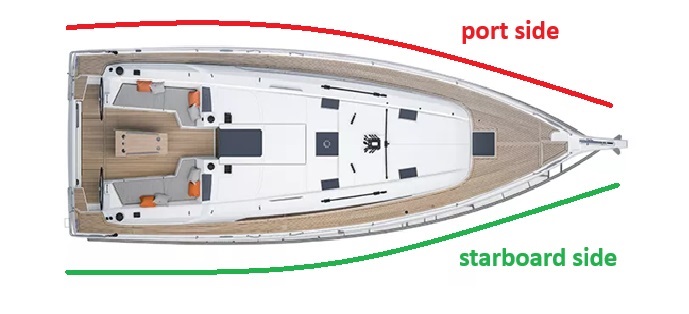
- PORT – This is the left side of the boat when viewed from the stern.
- STARBOARD – This is the right side of the boat when viewed from the stern.
- WINDWARD – The side of the boat the wind hits first. The side from which the wind is currently blowing from.
- LEEWARD – The side of the boat the wind hits last: it’s the direction opposite to the way the wind is currently blowing.

- TACKING involves turning the bow (front) of the boat through the wind. This technique is essential when sailing upwind (towards the wind).
- GYBING involves turning the stern (rear) of the boat through the wind. This maneuver is typically used when sailing downwind (with the wind).
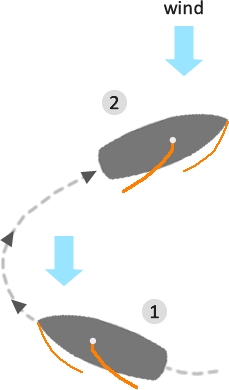
Tack
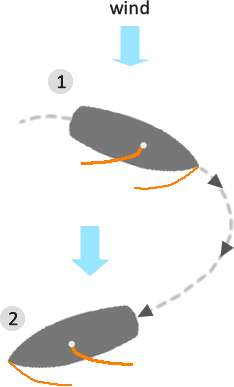
Gybe
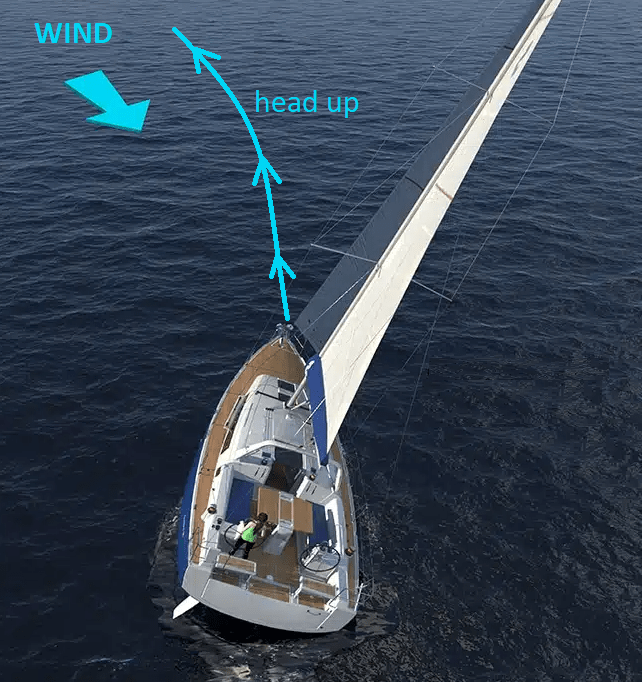
- HEADING UP (luffing up or, simply, luff) – Moving the boat’s bow into the wind, or towards the direction it is coming from, to windward.
- BEARING OFF (or bearing away) – Moving the boat’s bow away from the wind, change the direction to leeward.

- TRUE WIND (or real wind) – The wind strength and direction affecting a static object: i.e. the wind that a boat that is not moving would experience.
- APPARENT WIND – It is how the wind appears on a moving yacht: it is the summation (in direction and velocity) of wind as measured on land and of the wind caused by the boat’s own speed.
What are the Points of Sail?
The wind needs to flow over the sails to power the boat. You need to adjust (or “trim”) the sails to efficiently use the air flow to move forward.
Each time the boat changes direction or the wind shifts, you need to trim your sails. This allows you to take advantage of the full driving force of the wind. If you turn into the wind (“heading up”) you will have to pull the sails in closer (“sheeting in”). When you turn away from the wind (“bearing away”) you need to let the sails out further (“easing the sheets”).
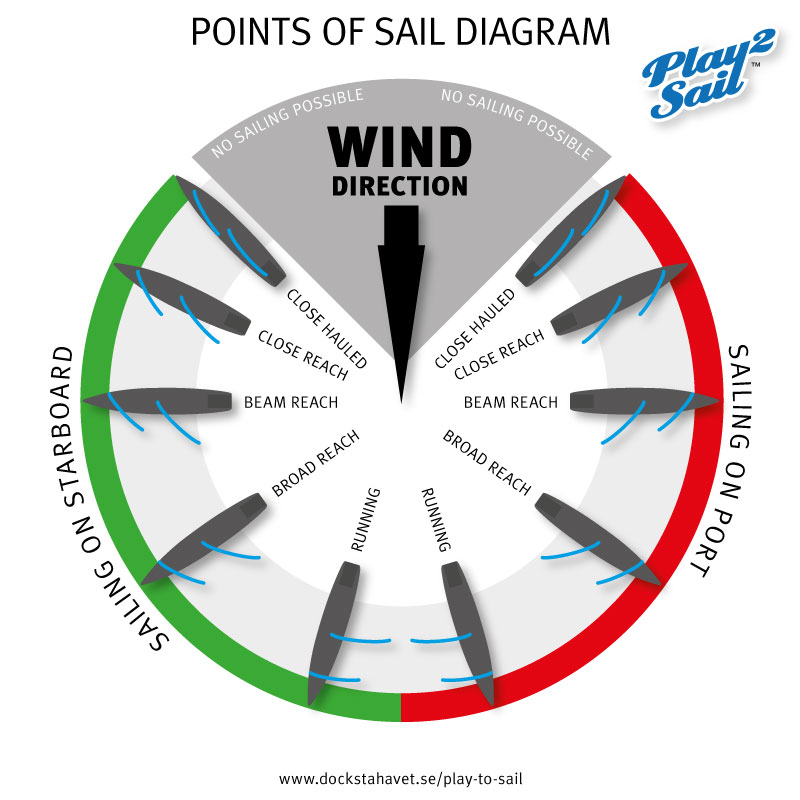
The main five points of sail are defined by the angle of the wind. It comes over the boat relative to the bow. Below you can see a diagram of the different positions and their names.
No Go Zone or No Sail Zone
As the name describes, this is the section that you cannot sail in. Your sails will start luffing and your boat will come to a halt. You can sail in any direction except directly into the wind. If you need to sail upwind you have to repeatedly tack your boat 90 degrees through the no go zone which is called “beating to windward”.
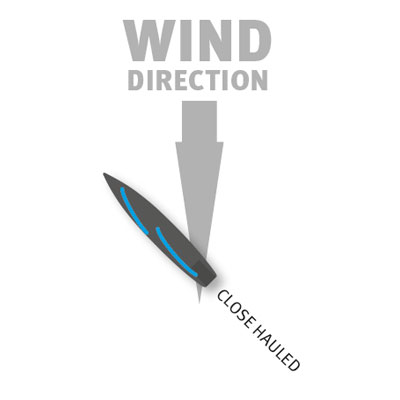
1. Close Hauled
Quite simply, as close to the wind as you can sail! Make sure your sails are pulled in tight. This is the position you tack to and from when beating to windward.
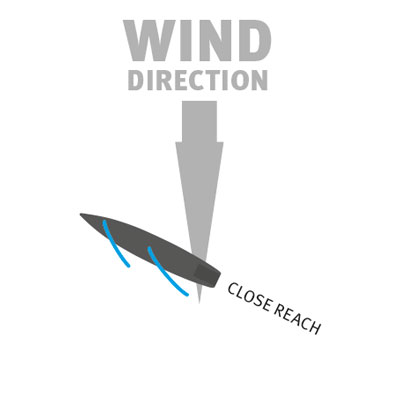
2. Close Reach
A little bit further out than close hauled. You will need to ease the sheets out slightly.

3. Beam Reach
The wind is at a 90 degree angle to the boat (on your beam). This is the easiest point of sail and you should set the sails half way out.
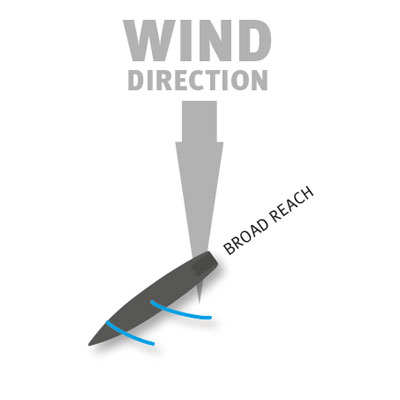
4. Broad Reach
Ease the sheets out even more when heading further downwind.
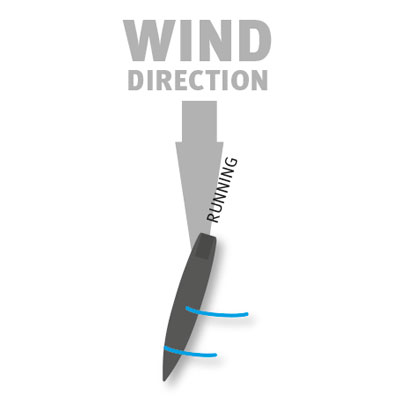
5. Running
The most unstable point of sail to steer with the wind directly behind you. It may be easier to let your sails out on the opposite side of the boat (“goosewinged” or “wing on wing”: mainsail set on one side of the boat and the headsail (jib or genoa) set on the opposite side).
COURSE – HEADING – BEARING
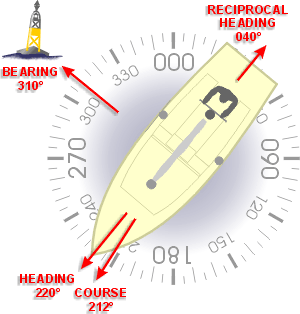
The direction a boat travels is its course.
The direction a boat’s bow is pointed is its heading. A boat’s course may not be the same as its heading due to the effects of current, wind or waves. Courses and headings are expressed in degrees.
A bearing is the direction of an object determined by a compass.
A boat could be following a course of 212° by steering a heading of 220°. A buoy abeam to starboard would be bearing the boat’s heading plus 90°, or 310°.
 sailingcompass.com